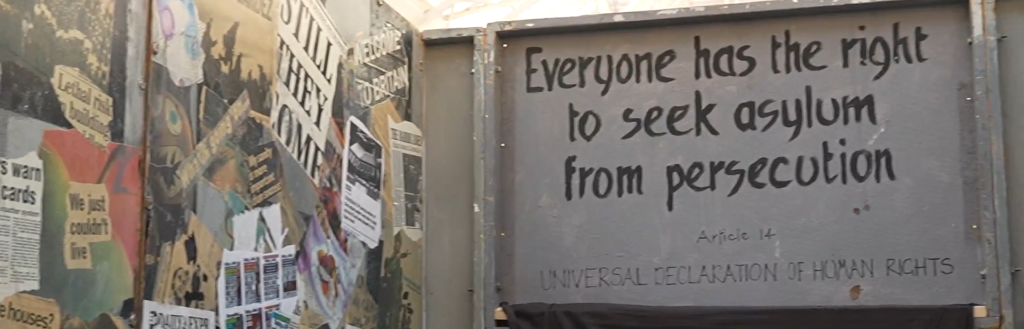
Hundreds of students stepped into the shoes of refugees thanks to a powerful, walk-through experience called Escape to Safety.
The interactive exhibition was brought to Kendal College in a successful piece of work by Westmorland and Furness Council to support students to gain an understanding of the experiences asylum seekers and refugees go through as they search for safety from war-torn countries.
450 students followed the journeys of three individuals from Iran, Sudan and Eritrea as a part of the learning experience, hearing their stories and experiencing the challenges they faced as they searched for safety.
A series of stations mirrored the difficult choices and dangers many asylum seekers and refugees face, encouraging the students to pause, reflect and consider the human stories behind global events often seen only in headlines.
Students and staff who took part described the experience as “thought-provoking” and “memorable”, with many reflecting on how the exhibition helped bring real-world experiences to life in a personal way.
Student Olivia said it taught her about what happens to people who land in the UK from small boats. “I've taken away that everyone's experiences are quite different and you shouldn't jump to conclusions about people. You just have to be welcoming to everyone.”
Student Mabel described listening to these people's stories as “very intimate”, whilst student Robert described the experience as “impactful”. He went on: “it was interesting to see that perspective of personal stories, and how it is for them rather than what you hear in the news”.
Some of the student groups heard from Younis, who has been given leave to remain in the UK having fled Yemen, where he had been shot in the leg during the conflict in that country. “I volunteer with 4 charities. I play football with a local team. I study English. I have to improve my language so that I hope to continue the master's degree in civil engineering. I have a good experience here. They have empathy, you know.”
Director of Student Experience and Transformation at Kendal College, Hilary Pezet, praised the event that has “truly made an impact”: “We host many events at the college throughout the year, but I can honestly say this is one that has truly made an impact. I have had so many tutors stop me to say what a powerful learning experience it has been and how meaningful it has been for their students.
“Encouraging this age group to pause, reflect, and think in a very immediate way about the plight of refugees and how we might support them, or at least understand their experiences with empathy is incredibly powerful. The conversations it sparked among our students have been significant and lasting.”
See this video on the council’s YouTube channel featuring students Olivia, Mabel and Robert, and Younis who has been given leave to remain in the UK:
FAQs
What is an asylum seeker?
An asylum seeker is someone who has applied for asylum and is awaiting a decision on whether they will be granted refugee status.
Asylum seekers do not have the same rights as a refugee or a British citizen. For example, people seeking asylum aren’t immediately allowed to work and cannot claim benefits. They can access healthcare and education for children.
After 12 months asylum seekers have the right to work while their claim is being processed under immigration rules. They can work in jobs which have a shortage, for example, the medical and engineering sectors.
What is a refugee?
A refugee is someone who has successfully obtained refugee status following an asylum application.
Once an asylum seeker is granted refugee status they are entitled to access the same support as a UK citizen, including Right to Work, education and benefits etc.
Support offered by Westmorland and Furness Council’s Global Resettlement Team
Serco manage asylum dispersal on behalf of the Home Office.
The council provides support to help individuals access and register with GPs and schools, and signposts them to other relevant support services.
Regular drop-in sessions are held, offering opportunities to access support and maintain regular communication with Serco.
Once an individual is granted refugee status, support is provided to help them register with key services, including setting up eVisa accounts, making benefits claims, opening bank accounts, applying for housing, and accessing education.
Individuals are also signposted to legal support if an asylum claim is rejected.