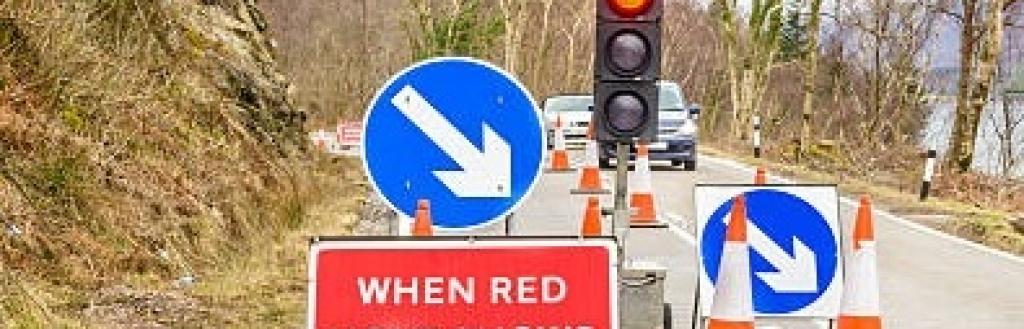
Westmorland and Furness Council is to ask for greater powers to manage and co-ordinate road works.
A motion to Full Council, proposed by Cllr Peter Thornton, Cabinet Member for Highways and ICT, and seconded by Cllr Rupert Audland, said:
"This council appreciates the challenge faced by utilities in the maintenance and repair of their assets. Street works are essential for many of the services we rely upon, such as internet access, electricity and running water but they can cause widespread issues for road and pavement users alike.
"Street works can cause disruption for residents, businesses and visitors, including through congestion, delays and road closures which affect drivers, cyclists and bus users.
"We wish to work alongside utilities to help them plan or co-ordinate works on our road networks to reduce disruption.
"With this in mind, we ask the Leader to write to the Minister for Future of Roads requesting a meeting to discuss whether more powers can be granted to councils in respect of the efficient management and coordination of street works in both urban and rural areas where there may be limited access to properties and businesses."
The council operates a permit scheme for utilities wishing to work on the road network, which aims to reduce safety hazards and incidents in and around works sites and the negative impact of works on residents and/or businesses, and promote greater cooperation and collaboration between different works promoters.
In emergencies, activity can start without a permit, but the utility company must apply for one within two hours of the activity starting.
Cllr Thornton said: “Our Streetworks team deal with over 12,000 requests every year and in many cases these are a symptom of success. Success in a timely response to requests to improve the highway and to mend potholes. Success in that we now have Fibre Broadband in rural areas, after 20 years of lobbying.
Success in that utilities are upgrading their networks to make them safer and more resilient.
“However, success does come with a price and inevitable disruption even when the works are perfectly coordinated, carried out to a high standard and have the appropriate signage and traffic management.
“But sometimes they are not coordinated, the signage is misleading, sometimes missing and often in the wrong place. Traffic lights can be inefficient or broken down and the highway is closed for long periods with nothing actually happening.
“We have a well-trained and efficient team in our Streetworks department. The problem they face is that they simply don’t have enough powers to be able to properly require utilities to work to a high standard and for us to challenge whether emergency works are emergencies or a consequence of bad planning.
“We need more collaboration between utilities and the council, including an obligation for utilities to share their forward plans.
“I should emphasise that in most cases our Streetworks team and the Utilities do work together well and do achieve many of these aims by fostering good relationships. But there is a tilted balance which is tilted in favour of the utilities. This needs to change."
Council Leader, Cllr Jonathan Brook, said he supported the motion and would write to the Minister for Future Roads to request a meeting to press for further powers that would enable rural councils to work more closely with utilities, plan streetworks more efficiently, and reduce disruption for our communities.
Cllr Brook emphasised that the council's aim was to collaborate constructively with utilities and government, ensuring that essential works are delivered while safeguarding access for residents and businesses.
He said: "We recognise and welcome the benefits that investment in infrastructure brings, particularly in rural areas. Internet and mobile connectivity, resilient electricity network, water quality and resilient supply, highways improvements and other vital services are sustained through streetworks. Utility companies working in rural areas face unique geological and terrain challenges. Excavation through hard rock or unstable soils requires specialist equipment and longer timescales, while narrow roads, steep gradients, and exposure to adverse weather make safe and efficient delivery more difficult. These factors increase the risk of disruption for residents and businesses, particularly where alternative routes are limited.
"So whilst the investment is welcomed we are very concerned by the significant disruption caused by the volume of work taking place on the network, particularly in rural areas where alternative routes are limited and access to properties and businesses can be severely constrained. Congestion, delays, and road closures affect pedestrians, cyclists, drivers, emergency services and bus users alike, and the impact on rural communities is often disproportionate.
"We were pleased that the Transport Committee recently called for Government to provide stronger local authority powers to manage and co-ordinate streetworks more effectively, including tighter controls on 'urgent' permits and clearer responsibilities for reinstating roads. The recommendations reflect many of the challenges we face in rural areas, where limited road networks mean that closures and delays can have a disproportionate impact.
"Unfortunately, the Government’s response to the committee’s report rejected most of the recommendations. While measures such as doubling fixed penalty notices and extending overrun charges to weekends and holidays are welcome, they do not go far enough to address the coordination issues that rural councils encounter. We remain concerned that rural councils lack sufficient powers to coordinate works effectively."