Westmorland and Furness Council is challenging its rating in the Department of Transport’s newly-introduced RAG rating system for highways authorities.
The council is rated Amber in the three categories – Road Condition, Capital Spend, and Best Practice – and is seeking an explanation for its overall Red rating.
The council will be challenging the rating based on:
- Being marked down for innovation, despite leading nationally on Local Councils Roads Innovation Group NW, the Association of Directors of Environment, Economy, Planning & Transport; The Future Roads Group, and having a dedicated innovation budget;
- Incorrect scoring on footways and cycleway. These were included in our submission but were not scored;
- The weighting for road condition on unclassified roads (which disadvantages rural authorities);
- Inaccurate resurfacing figures which were not checked with the council.
Councillor Peter Thornton, Cabinet Member for Highways and ICT at Westmorland and Furness Council, said: "We are always looking to improve the condition of our highway but do not understand why Amber ratings in the three categories are then translated into an overall Red rating. The assessment methodology has also caused some confusion among many authorities, and we are seeking clarity on that. We were assured that only sending data for the last two years, since Westmorland and Furness Council came into being, was acceptable but we seem to have been penalised for not sending five years' worth of data.
"Our network has scale, rurality, and historic assets which make maintenance uniquely challenging, but we are determined to meet these challenges head-on and build on the progress already achieved."
Westmorland and Furness Council manages one of England’s largest and most rural highway networks, spanning over 2,600 miles of roads – significantly more than the average throughout England and Wales – supported by more than 2,000 bridges, 72,000 drainage gullies, and 20,000 streetlights. This network includes unique assets such as remote mountain passes and historic bridges, which present significant maintenance challenges.
Despite these complexities, we have made improvements such as:
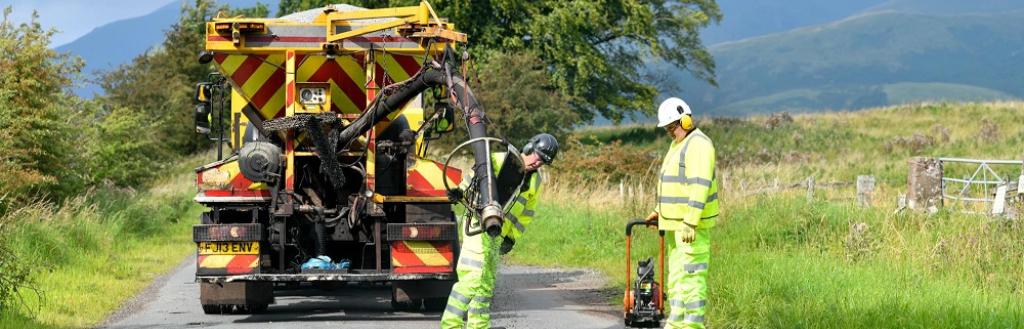
- Over 33,000 potholes repaired in the previous year, with innovative techniques such as jet patching and thermal patching;
- Improved road condition scores based on accredited survey data;
- Increased investment, with £8.4 million allocated for pothole repairs and multi-million-pound resurfacing programmes on key routes.