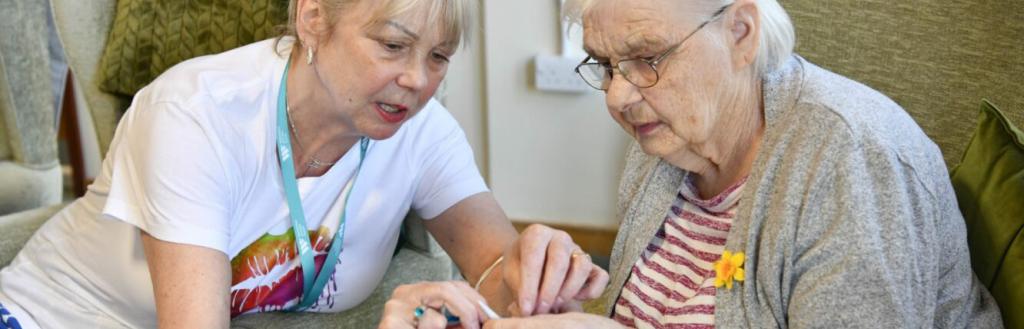
Westmorland and Furness Council’s Adult Social Care support has been praised for its person-centred approach, support for carers, keeping people safe, and for its pro-active prevention work to support health and wellbeing.
The Care Quality Commission (CQC), in its first assessment of the new council since it was formed in 2023, said the council "had processes and practices in place to support people well. There was good support taking place for people across adult social care and a strong leadership team in place."
It also praised Adult Social Care’s productive partnership working with the NHS and the voluntary sector, and its understanding of what needs to improve further. Further developments were needed in areas such as co-production, accommodation for people with complex needs and waiting times.
The CQC assessment took place in June 2025. The council was rated as “Good” in four out of nine areas assessed, with “evidence of some shortfalls” in five areas.
The council received the highest possible score within an overall rating band of “Requires Improvement” – meaning the council was just one point out of 100 away from being rated “Good” overall.
Chris Badger, CQC’s chief inspector of adult social care and integrated care, said: “We found an authority which wasn’t far off from providing good access to services in all the areas we looked at. It had strong leaders who were aware of the challenges they faced, and were on an improvement journey to ensure people have more positive experiences of adult social care. Leaders understand what needs to change and have started building the right foundations to deliver better support.”
Cllr Patricia Bell, Westmorland and Furness Council Cabinet member for Adults, Health and Care, welcomed the report, saying: “This is a strong report with a lot to be proud of. It is an accurate representation of where we were when the assessment took place, and our own self-assessment of our strengths and areas to focus on improving.
“After less than three years as a new unitary council it is an achievement to come so close to a ‘Good’ rating overall, and for the CQC to recognise we are well on the way to being good in all areas.
“A huge amount of progress has already been made since CQC visited us nearly eight months ago. For example, we have continued to reduce the number of overdue support plan reviews, and have halved the number of people waiting for a social work or occupational therapy assessment - with nearly all people waiting no longer than 28 days for their assessment to commence.
“On waiting times, I would like to reassure residents that we prioritise and schedule our assessments carefully at first contact, and if anyone is going to be waiting longer than their agreed date they are contacted again to ensure they can safely wait a little longer.
“We are also particularly pleased that our strong partnerships with our NHS and voluntary sector colleagues were recognised, and the success of our hospital discharge partnership work highlighted, with the council providing new intermediate care beds in Barrow, and soon Kendal, and the NHS providing therapeutic support for patients.
“This week we have also heard about the severe financial pressures the council is under. Providing statutory adult social care and support for people with a physical or mental impairment or illness accounts for one third of the council’s proposed £301m budget for the year ahead, and is under ever increasing demand pressure and the impact of an ageing population.
“A key part of our improvement plan is to have the right type of provision to support people to be as independent as possible for as long as possible, leading to better outcomes for people at the same time as helping us better manage demand and costs.
“I would like to thank and congratulate our staff and leadership in Adult Social Care, and the many others across the council who support adults’ care and wellbeing, for their professionalism, compassion and the pride they take in the work they do with our residents every day.”
The CQC report, which can be found in full on the CQC website, recognises a great deal of strong, positive practice across Adult Social Care, including:
- Person-centred approach where people feel listened to, understood, and supported.
- Positive and effective support for carers, with timely assessments and good access to help, groups and advice.
- Strong partnership working with NHS Integrated Care Boards, housing, voluntary sector partners and others.
- Proactive prevention work, including our health and wellbeing coaches and community-powered approaches.
- Strong commitment to equity and inclusion, especially around rural communities, LGBTQ+ inclusion, and work with asylum seekers, refugees and Gypsy, Roma, and Traveller communities.
- A stable, improving care market, strong homecare capacity and a valued Shared Lives service.
- Supportive, visible leadership and a positive learning culture.
- Effective safeguarding, with confident multi-agency working.
Areas for improvement identified include developing a stronger council-wide approach to prevention, waiting times for assessments and reviews, strategy development, specialist provision for people with more complex needs, hospital discharge processes, rurality challenges including travel and respite, the framework for assessing and charging adults, and availability of personal assistants to strengthen our direct payment offer.