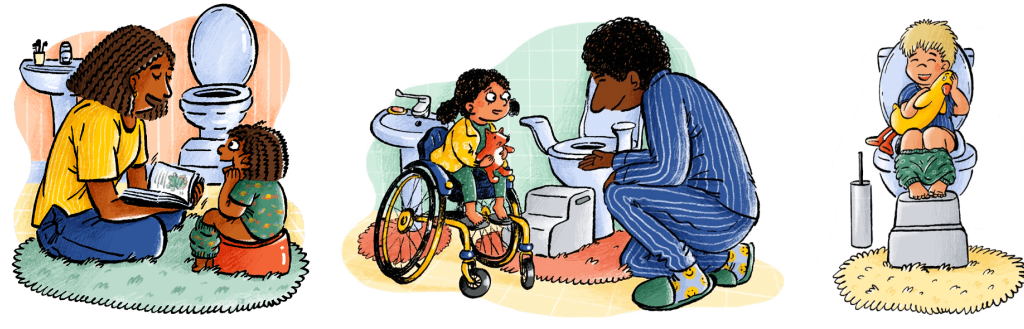
If you’re worried about potty training, you’re not alone. Many parents have asked for clearer, simpler advice and support. This guidance brings together trusted, agreed advice on toilet training, developed by Early Years experts and supported by government as part of the Best Start in Life strategy.
The new guide The Potty Training Guide - Starting Reception covers when to start potty training and how to get children enthusiastic about using the potty and toilet.
There's lots of practical advice for you and your child, such as:
- helping their favourite teddy or toy have a ‘turn’ on the potty and then encouraging them to sit on it themselves
- having regular potty sitting or toilet practise
- tips to make the bathroom feel more comfortable for your child
- helping your child to become dry at night
Regular potty sitting practice can begin early, building up to several times a day. For children with no medical diagnoses such as bowel or bladder conditions, the right time to be coming out of nappies is 18 to 30 months.
A healthy diet and fluid intake really helps to promote a healthy bowel and bladder. Give your child a diet which includes fibre (such as fruit, vegetables and brown bread) to help avoid constipation, which can make potty training harder.
Drinking plenty of water divided between 6 to 8 drinks spread evenly through the day, and when introducing solids, offer water in a cup.
Why potty training matters
1 in 4 children are not toilet-trained when they start Reception. Research shows that children should be out of all nappies between 18 to 30 months, well in advance of starting Reception year in school. Being toilet trained not only helps children feel confident and part of the group, but it also means teachers can spend more time teaching and supporting every child’s development.
Potty training is an important milestone in a child’s development. We understand that all children develop at their own pace, and there are exceptions for certain medical conditions, but research shows it’s best for a child’s bowel and bladder health to stop using nappies between 18 and 30 months.
Councillor Janet Battye, Cabinet Member for Children’s Services said: “This new guidance from early years experts will be a brilliant help in getting their children potty trained and ready for school. By giving families trusted support early on, we’re helping children arrive at the school gates confident, ready to learn, and ready to shape their own future."
The guide acknowledges that all children are unique and reach these milestones in their own time, but that they should be supported in a way which responds to individual need and motivations, to achieve these independent skills as early as possible as a key part of their developmental journey.