We all have an imaginary midline running down the centre of our bodies. To coordinate both sides of the body effectively, we need to be able to reach across our body and cross that imaginary line.
Each side of the brain is responsible for controlling the opposite side of the body. The right side of the brain affects the left side of the body, and the left side affects the right side. Both sides of the brain and body need to work together when carrying out activities that involve using both sides of the body, a skill known as bilateral coordination.
Learning to cross the midline is an important part of developing bilateral coordination.
When side-to-side movement is difficult, each hand tends to operate on its own side of the body. Children who avoid crossing the midline often turn their body instead, which can affect the development of hand dominance and make activities that require both hands more challenging.
Signs a child may be having difficulty crossing the midline
A child who is not able to cross the midline may find the following activities difficult:
- tying shoelaces
- coordinating a knife and fork
- reading and writing
- establishing hand dominance
- ball games
- drawing and cutting skills
Crossing the midline during play
The following activities can help children develop the ability to cross the midline more automatically:
- pop bubbles using only one hand, encouraging the child to reach across their body to pop bubbles on the opposite side
- reach across the body to pick up bean bags, balls, stuffed animals or other objects and throw them at a target
- draw large figure eights (∞) on paper, on the floor with a finger, in the air, or by driving a toy car around a figure-eight pattern
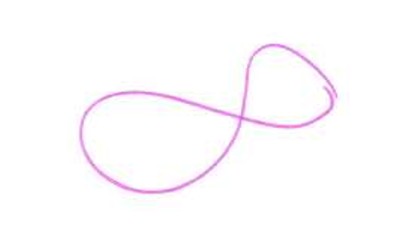 stand or kneel with a ribbon or streamer in one hand and draw a large sideways figure of eight in the air
- move objects from a box on one side of the body to a box on the other side using one hand only
- play balloon tennis using one hand and encourage movements that cross the midline
- throw a bean bag with one hand into a container placed on the opposite side of the body
- play with sand by scooping from one side of the body and placing it into a bucket on the other side without switching hands
- pretend to drive a car while holding a ball as a steering wheel and crossing the arms while turning
- play flashlight tag by following a torch beam across a wall in a dimly lit room
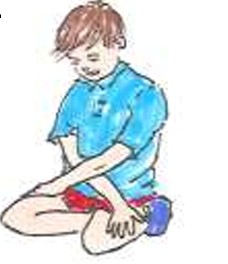 touch the opposite hand or elbow to the knee
- cross one foot over the other while walking sideways
- try a knee-slap walk by touching each raised knee with the opposite hand or elbow
- play windmills by touching the right hand to the left foot and the left hand to the right foot
- wash a car and encourage large scrubbing movements that cross the body's midline
- push toy vehicles along a taped path on the floor with lots of turns and curves
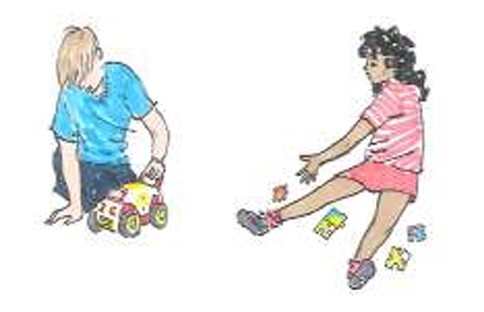 encourage floor play while leaning on one hand or elbow and placing toys on that side to encourage reaching across the body
- play sorting games by placing items on one side and containers on the other, encouraging the child to reach across to sort them
- play body-awareness games such as Hokey Cokey or Simon Says
- while kneeling, draw a large rainbow on paper placed on the floor, using the same hand throughout
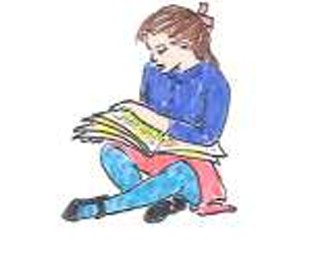 while kneeling, draw a large arc around the body and turn it into a rainbow
- play Frisbee throwing games
- encourage crossing the midline when turning pages in a book
Establishing hand dominance
If a child is unable to cross the midline easily, they may pick up a pencil or other object with whichever hand is closest. This can affect the development of a consistent hand preference.
To help identify hand dominance, place an object directly in front of the child and observe which hand they use to pick it up. Repeat this several times and keep a record of which hand is used most often.
It is acceptable for children to have different dominant hands for different activities, such as using their left hand for writing and their right hand for cutting with scissors. The important thing is that they use the same hand consistently for each activity.