Good seating
Good seating is the key to many activities. By reducing the effort and energy needed to stay sitting upright, children can find it easier to carry out important daily activities such as eating, playing and learning.
Seating in the classroom
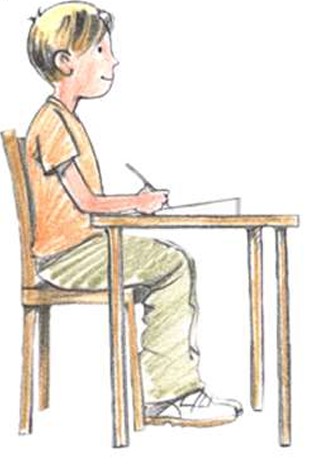 The following strategies can help children develop good seating habits in the classroom:
- try different types of chairs and stools
- try using a sloping surface to write on - such as a level arch file
- elbows should rest comfortably on the table without the shoulders hunching
- hips, knees and ankles should be at right angles
- bottom should be well back in the chair
- check the chair and table heights - are the feet flat on the floor? If not, consider resting feet on a block or similar
- ensure that the child is facing the source of the information at the front of the class
- consider grouping left and right handers together so that their elbows don't collide
- display a visual prompt showing correct seating for the whole class
- teach the whole class how to sit correctly
- use photographs showing the child sitting correctly and refer to them as visual prompts
Benefits of good seating
Good seating can provide a range of benefits:
- improved hand and arm control, allowing children to use their hands for activities such as writing and eating
- reduced fatigue through better support and stability
- improved eye contact, concentration, communication and social interaction
- increased independence
- improved comfort
Other positions for play
Children do not always need to sit at a table. Alternative positions can provide variety and help develop different skills during play activities.
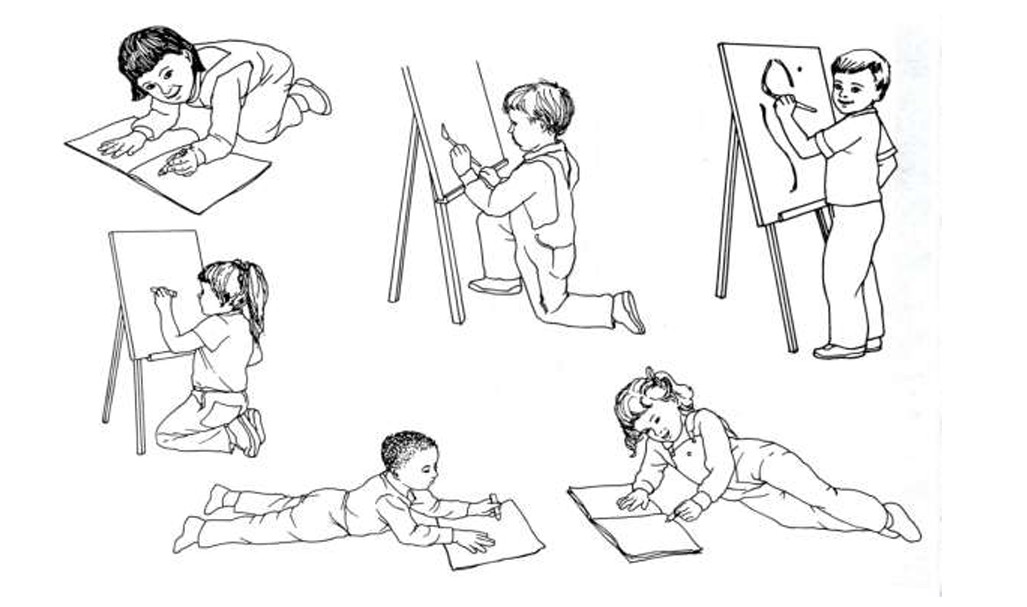
Source: Pre-Writing Skills by Marsha Dunn Klein (Therapy Skill Builders, 1990)