Learning to tie shoelaces
Tying shoelaces is a difficult skill that takes time and practice to learn. Children need good hand skills, coordination, concentration and the ability to remember and follow a sequence of steps.
Every child learns at their own pace. Regular practice, praise and encouragement are key.
Tips to help your child
- make sure your child understands why learning to tie laces is important. Encourage regular practice. You may wish to consider using a reward chart.
- use a consistent method. Make sure all adults teaching the skill use the same approach.
- sit beside your child when practising so you are both looking at the task from the same angle.
- you can try backward chaining to support your child to take part in the task and achieve some success (see the "Helping your child learn new skills" advice sheet for more information).
- use picture prompts or step-by-step photos to help your child remember the sequence.
- try using two-coloured shoelaces to make it easier to tell the laces apart.
- stiffer laces can be easier to manage. Dipping laces in PVA glue and allowing them to dry can help.
- once your child knows the steps, practise with a shoe placed on their lap or on a table before moving to shoes on their feet.
- practise little and often. Look for opportunities to practise throughout the day, such as dressing gown cords, bags, boxes or toys that have laces to fasten and unfasten.
- avoid practising when you're in a rush, such as before school.
- turn practice into a game and celebrate effort as well as success.
There are lots of shoelace-tying methods available online. Searching for "shoelace tying tutorials" on YouTube will give you a variety of approaches to suit different learning styles.
Step-by-step guide
| Step | What to do | Prompt | Image |
|---|---|---|---|
| Step 1 | Cross the left (blue) lace over the right (yellow) lace. The blue lace is now on the right side. | Build a tee-pee… | 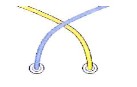 |
| Step 2 | Wrap the blue lace around the back of the yellow lace and through the gap between the laces. | Come inside… | 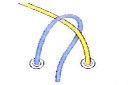 |
| Step 3 | Pull both ends tight to complete the knot. | Pull it tight so we can hide. |  |
| Step 4 | Make the blue lace into a loop by doubling it back on itself. | Over the mountain… | 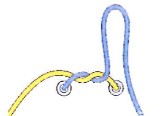 |
| Step 5 | Take the yellow lace and pass it behind the blue loop. Continue around the blue loop until it comes to the front. | And around we go… | 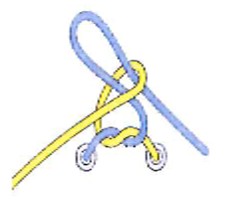 |
| Step 6 | Start to feed the yellow lace into the hole that has just been made. | Here's my arrow… | 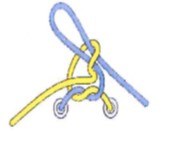 |
| Step 7 | With the yellow lace now through the hole, hold both loops and pull the knot tight until it is securely tied. | And here's my bow! |  |
Alternatives to shoelaces
Some children find traditional shoelaces difficult, even with lots of practice. This is especially common if they have difficulties with coordination or motor planning. Alternative fastenings can help children become more independent while they continue developing their skills.
Options include:
- elastic no-tie shoelaces
- Greeper® laces
- Hickies® lace replacements
- Coiler® laces
- Easy Lace® systems
- Velcro-fastening shoes
Remember
Learning to tie shoelaces takes patience, practice and encouragement. Keep sessions short and positive. Celebrate small successes. Focus on building confidence as well as independence.