Starting primary school
Starting Reception is an exciting time. Children begin school with a wide range of skills and experiences. They all develop at their own pace.
Reception and Year 1 are important years for developing the foundations needed for learning, including paying attention, hand skills, pencil control and independence.
Supporting learning through play
Children learn best through a variety of play and movement experiences. Activities that develop coordination, hand skills and body awareness will help prepare them for classroom activities such as writing, drawing and using tools.
Good sitting and learning positions
When children are sitting for table-top activities, encourage:
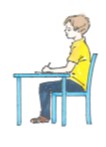
- feet flat on the floor
- knees, hips and ankles bent at approximately 90°
- forearms resting comfortably on the table
- an upright posture rather than slouching
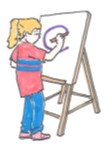
Children also benefit from working in different positions, such as standing, kneeling, lying on their tummy or using an easel.
For children who are easily distracted:
- seat them where they can see the teacher and board clearly
- reduce visual distractions where possible
Getting ready for writing
Pre-writing shapes contain all the lines, curves and connecting points that are used to form letters.

Typically, a child who has difficulty forming these shapes will have difficulty with letter formation. For example, if a child cannot draw a diagonal line, they may struggle to write the letter 'M'. It is important for children to be able to draw these shapes before being expected to write letters.
Encourage lots of opportunities for:
- drawing and colouring
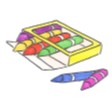
- mark making with chalks, crayons and pens
- drawing shapes and patterns
- tracing lines and curves
Children often learn best when writing activities are fun and hands-on.
Try:
- drawing in sand, shaving foam or finger paint
- making letters with playdough, string or sticks
- writing large letters on a whiteboard or chalkboard
- air writing using ribbons or streamers
- making letter shapes with their bodies
Developing pencil grip
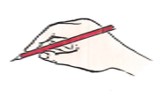
A mature pencil grip develops gradually. Many children are still developing this skill throughout Reception and Year 1.
Helpful tips:
- offer a variety of pencils and crayons
- try triangular pencils if appropriate
- focus on comfort and control rather than achieving a perfect grip
- encourage regular fine motor play such as playdough, colouring, threading and cutting
Developing hand dominance
Many children are still deciding which hand they prefer to use when they start school. It is common for children to use different hands for different activities while they develop hand dominance.
To help identify a preferred hand, place objects in front of your child and notice which hand they naturally choose. Encourage them to use the same hand consistently for writing and drawing.
Developing coordination and crossing the midline
Crossing the midline means reaching across the body. This skill supports handwriting, reading, dressing and many everyday activities.
Fun activities
- playing catch and ball games
- clapping games and action songs
- puzzles placed either side of the body
- drawing large shapes on paper or a whiteboard
- Simon Says, for example "touch your left knee with your right hand"
Supporting writing and classroom activities
- present work in small, manageable sections
- keep worksheets simple and uncluttered
- use non-slip mats to prevent paper moving
- praise effort and progress rather than perfection
- position paper at a slight angle for comfortable writing
Remember
Children develop at different rates. Reception and Year 1 are a time for building the foundations for learning. Giving lots of opportunities for play, movement, drawing and exploring will help your child develop the skills and confidence they need for school success. Celebrate small achievements and enjoy the learning journey together.