Fine motor skills are needed to complete activities such as writing, cutting with scissors, dressing,
brushing teeth and hair, feeding and playing.
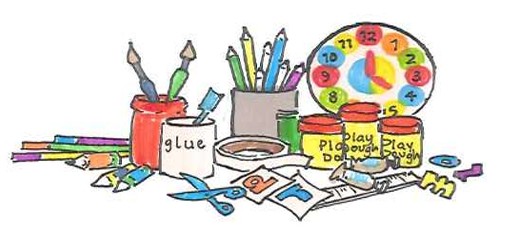 A child with poor fine motor skills may be having difficulties with:
- writing
- drawing
- playing with construction toys
- cutting with scissors
- jigsaw puzzles
- buttons
- zips
- shoelaces
- using a knife and fork
- washing and drying hands
- opening packets
Before the development of smaller hand and finger movements can begin, core and shoulder stability and overall gross motor coordination should be developed (see Coordinating my body for play and activities advice sheet for activity ideas).
It is also important that children have a stable position (either sitting or alternative) when learning and carrying out fine motor activities (see Good Seating advice sheet).
General messy play is an essential part of fine motor development. However, some children dislike the feel of textures (they are touch sensitive) and so are reluctant to play games that will help to develop their fine motor skills (see Messy Play advice sheet for ideas).
Activities to develop fine motor skills during play
Muscle strengthening and joint stability
Any activity where the hands and arms are working against a resistance will build up strength and
stability over time:
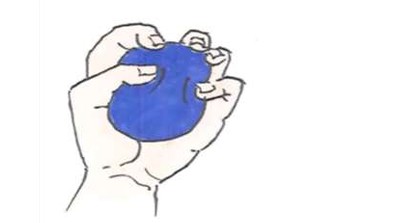
- any activity involving playdough (see Playdough advice sheet)
- large scribbling with crayon over textured surface, using bending and straightening motions of the arm
- playing a drum or xylophone
- hammering with a hammer or mallet
- sawing with a saw
- scribbling or colouring over templates or other textured materials. (This requires a lot of rubbing whilst holding a writing implement thus strengthening the muscles and developing two handed co-ordination.)Stirring or kneading materials of a thick consistency, such as biscuit mixture or dough
- using one hand, crumple paper into a small ball and throw into a basket. Alternate hands and vary the size and thickness of the paper. Throw into a bin from a distance or flick into a goal
- popping bubble wrap
- poke marbles into a ball of clay/putty etc and dig out using thumb and index finger
- place a rubber band around the child’s fingers and encourage them to open and close their fingers
- activities that involve squeezing e.g. squeeze bulb toys, spray bottles, squeezing water out of a sponge
The ability to rotate the forearm (to allow palm up and palm down position)
The following activities encourage children to develop forearm rotation, enabling them to turn their palm up and down as needed for everyday tasks:
- turning doorknobs with the palm on the front of the doorknob
- turning over blocks or upturned beakers
- pouring from one container to another
- winding wind-up toys
- using keys or toys with keys
- wringing out dishcloths, flannels
- turning over playing cards
Finger isolation and awareness
The following activities help children develop finger isolation and finger awareness, enabling them to move individual fingers with greater control and precision:
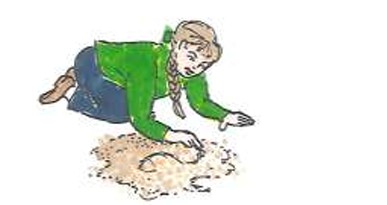 finger painting and drawing in sand and other textures
- pointing at pictures in a book
- finger rhymes
- finger puppets
- playing piano/keyboard
- using computer keyboard
- playing with toy telephone dial/buttons
- racing creepy crawlies – both hands placed on the table with fingers spread out, fingers propel hands across the table – who gets to the middle first?
- Subbuteo table football
- board games, using index finger to push counters round
- use forefinger to draw patterns and shapes in sand, clay, steamy windows
- feely bottles – fill containers with various textures. Child puts index finger in to feel the contents
- drumming the fingers on different types of surface
- bandage scrunching. Place rolled up piece of crepe bandage onto a table. Child rests his wrist on the end and fingers walk along the bandage scrunching it into the hand. Hide a small toy in the centre of the roll to make the game more fun
- playing with a variety of spinning tops
- finger lifts. Ask the child to place both hands palm down on a table. Touch each finger in turn and ask the child to lift it off the table, keeping other fingers and wrist still
- when the child can do this try pointing to the finger to be lifted instead of touching it
The following activities help children develop a pinch grip, using the thumb and index finger together to pick up and manipulate small objects:
- play with small pegs and beads; picking up and placing in a small container and using peg
boards - picking up small finger foods such as cereals, pasta, peas, raisins
- threading pasta onto a string or shoelace -pick up pasta with thumb and index finger
- posting peas through narrow necked bottle. Hold bottle with ‘non writing hand’
- clipping pegs around box. Cut off bottom of cereal packet to make box, place weight in bottom to prevent box falling over. Move onto clipping with bulldog clips
- posting coins through slot in box lid
- picking up pebbles or pennies -see how many you can be picked up with one hand and then let go of them one at a time into a container
- games such as Connect 4 and Kerplunk
Finger manipulation skills
The following activities help children develop finger manipulation skills, improving their ability to move and control objects within one hand:
 picking up small objects with thumb and index finger and turn within the hand
- use a pencil with a rubber and turn the pencil within the same hand to use the rubber
- pick up objects one at a time and hold in the same hand whilst picking them up e.g. coins
- twist pipe cleaners to make shapes
- ‘walk’ balls of clay or play dough across a table or up and down walls
- trace around and colour small areas
- colour a picture using small circles
- tying knots and undoing them
- draw a line in and out of a row of dots (like a slalom)
- write long lines of the same letters, all joined up
- use two different coloured marbles and put them in the palm of the hand. Make the two marbles change place without using the other hand
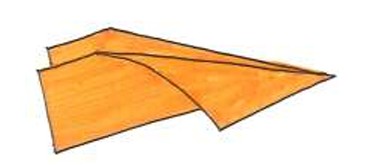
- paper folding