Writing and the development of writing
Supporting your child's writing skills
Writing is a complex skill that develops over time. Before children can write confidently, they need opportunities to build a range of skills including attention, hand strength, coordination, pencil control and letter formation. Every child develops these skills at their own pace.
Skills needed for writing
Successful writing depends on:
- understanding language and instructions
- attention and concentration
- hand and finger strength
- hand-eye coordination
- good posture and sitting position
- pencil control
- developing letter and shape formation
Pencil grip development
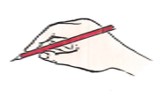
Pencil grip develops gradually through play and everyday activities. Many children move through different pencil grips before developing a mature grip.
To support pencil grip:
- make sure your child is sitting comfortably with good posture
- try shorter, chunky or triangular pencils and crayons
- complete hand warm-up activities before writing
- encourage playdough, colouring, cutting, threading and construction toys
Remember, there is no need to force a mature pencil grip before your child is developmentally ready.
Developing hand dominance
Children usually develop a preferred hand for writing between 4 and 6 years of age.
You can encourage this by:
- observing which hand your child naturally chooses for drawing and writing
- placing activities in front of them rather than to one side
- encouraging them to use the same hand consistently for writing tasks
Pre-writing skills
Before learning letters, children need to develop the ability to make simple shapes and patterns. These are known as pre-writing shapes.

Try:
- mark making, colouring, tracing and drawing shapes
- completing simple mazes and dot-to-dots
- copying patterns with blocks or drawing simple pattern repeats
Children often learn best when these activities are active and fun.
Fun ways to practise
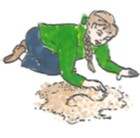
- draw in sand, flour, shaving foam or finger paint
- make letters with playdough, pipe cleaners or string
- write large shapes on a whiteboard or chalkboard
- draw letters in the air using whole-arm movements
- walk letter shapes on the floor
- paint large letters outside using water and a paintbrush
Begin with larger activities and gradually reduce the size as your child's control improves.
Managing pencil pressure
Some children press too hard or too lightly when writing. Learn about how much pressure is needed through fun activities such as practising thick and thin lines or creating crayon rubbings using paper and everyday items such as coins, leaves, tree bark, keys and metal colanders.
If your child presses too hard
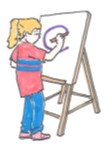
- write on a vertical surface such as a whiteboard
- use softer pencils or crayons
If your child presses too lightly
- write on a table or floor surface
- draw in playdough or clay using a pencil
Supporting attention when writing
- keep activities short and achievable
- break tasks into small steps
- reduce distractions where possible
- use visual supports and demonstrations
- encourage movement breaks between writing activities
Alternatives to handwriting
For some older children, handwriting can be tiring or affect their ability to show what they know. Alternative ways to record work may include:
- using a laptop or tablet to type school work
- voice recordings or voice-to-text software
- being supported by using a scribe
- mind maps and diagrams
- worksheets with spaces to fill in
- extra time for written tasks
The focus should be on helping children demonstrate their understanding, not just their handwriting.
Remember
Writing skills develop through play, practice and everyday experiences. Encourage lots of opportunities for drawing, colouring, building, cutting and exploring. Celebrate effort and progress. Remember that confident writers develop at different rates.