Hyper means 'more' and mobility means 'movement'. Children who are hypermobile have more movement in their joints than their peers and have less stability in their joints. They can put themselves in unusual positions and may perform 'party tricks' with their joints, such as bending their thumb to touch their forearm.
In most cases this is because the child has more elasticity in their connective tissue (the tissues that hold the body together).
Children are generally more flexible than adults and, in most cases, their joints become more stable as they get older. They may be flexible in one or two joints or throughout their body.
Most children with hypermobility will have no problems with their joints but in a few cases they may experience discomfort, which might cause problems participating in activities.
The strategies below can help improve and manage difficulties associated with hypermobile joints.
What you may see
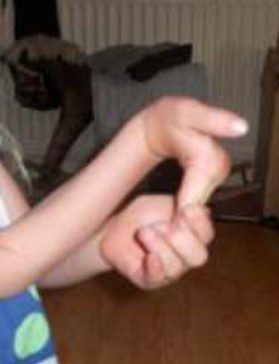 The effects of hypermobility depend on which joints are affected. A child may be able to do the splits easily or contort themselves into unusual positions. You may notice very flat feet, frequent ankle rolling, or repeated ankle sprains.
Children with hypermobile fingers may find it difficult to hold a pen correctly or fasten buttons when dressing. They may complain of hand pain when writing and can take longer than their peers to complete written work because they need regular breaks to stretch their hands.
When walking long distances, they may tire more quickly and need more frequent rest breaks. Repetitive activities can sometimes cause pain because the muscles around hypermobile joints have to work harder to provide support.
Children with hypermobility may also have reduced proprioception (awareness of where body parts are without looking at them). As a result, they may appear less coordinated during movement.
Strategies and advice
At school
If children are having difficulties with hypermobility in their upper limbs
The following strategies can help support children who experience difficulties with hypermobility in their upper limbs:
- use thicker pens and pencils or pen grips that are easier to hold
- encourage regular rest breaks during writing activities to allow stretching of the hands and fingers and help prevent muscle cramps
- a useful stretch is to place the palm flat on a chair seat with the elbow straight and fingers pointing forwards, then gently put weight through the hand
- strengthening the muscles around the joints may help reduce tiredness
- consider alternative ways of recording work or allowing additional time where appropriate
If children are having difficulties with hypermobility in their lower limbs
The following strategies can help support children who experience difficulties with hypermobility in their lower limbs:
- encourage the use of supportive trainers rather than slip-on shoes or pumps
- avoid jumping from heights onto hard surfaces, as hypermobile joints can be difficult to control when landing
- provide regular rest breaks during repetitive physical activities as children may tire more quickly
- long-distance running, particularly on uneven surfaces, may need to be adapted
- if an activity causes pain, allow the child to rest and return once the pain has eased
When sitting
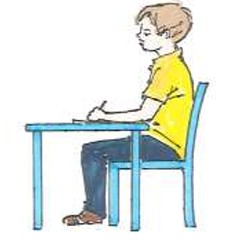 Encouraging good sitting habits can help improve posture and reduce strain on joints:
- discourage 'W' sitting (kneeling with the bottom between the knees), as this can affect leg alignment
- encourage cross-legged sitting or sitting with legs stretched out in front
- if these positions are difficult, provide a chair
- promote good posture by encouraging the child to sit with their bottom at the back of the chair and the chair pulled close to the table
- a writing slope may be helpful if maintaining an upright sitting position remains difficult
General advice
The following general advice may help children manage the effects of hypermobility:
- encourage school bags to be carried over both shoulders and keep the weight to a minimum by using lockers and avoiding unnecessary items
- encourage well-fitting shoes with laces or Velcro fastenings and avoid high heels and slip-on shoes
- if ankle rolling is frequent, boots may offer additional ankle support
- children may become tired by the end of the school day, especially on large school sites. If available, access to lifts may be helpful when legs become sore
- children do not need to avoid physical education (PE) unless advised to do so by their GP or physiotherapist
Out and about
Regular activity can help improve strength, fitness and joint stability:
- activity remains important, even on difficult days
- building strength can help reduce pain by supporting the joints with stronger muscles and avoiding overstretching
- swimming is an excellent activity because the water supports the joints while allowing exercise
- children with a high degree of flexibility may be drawn to activities such as ballet, gymnastics and martial arts
- sports involving sudden stopping and twisting, such as football, basketball and squash, may aggravate joint problems
- maintaining a healthy weight can help reduce strain on the joints
W sitting
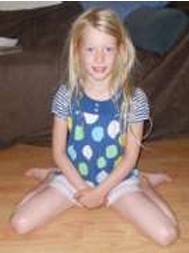 W sitting is when a child sits on the floor with their bottom, knees and feet all resting on the ground, with their feet positioned either side of their body to form a "W" shape.
Children may W sit because of habit or reduced core stability. However, it can have several negative effects:
- reduces the use of core muscles, affecting core strength and trunk rotation, which can impact the development of gross and fine motor skills and participation in everyday activities
- contributes to poor sitting posture
- may contribute to an in-toeing gait ("pigeon toes")
- places stress on joints, which may result in pain later in life
How to reduce W sitting
The following approaches can help encourage alternative sitting positions:
- encourage alternative sitting positions such as cross-legged sitting, side sitting, long sitting, squatting, sitting on an appropriately sized chair or lying on the tummy
- encourage activities that develop core strength and reduce the need for a wide base of support
- see the Coordinating my body for play and activities advice sheet for more information
- provide regular reminders and encouragement to use alternative sitting positions